


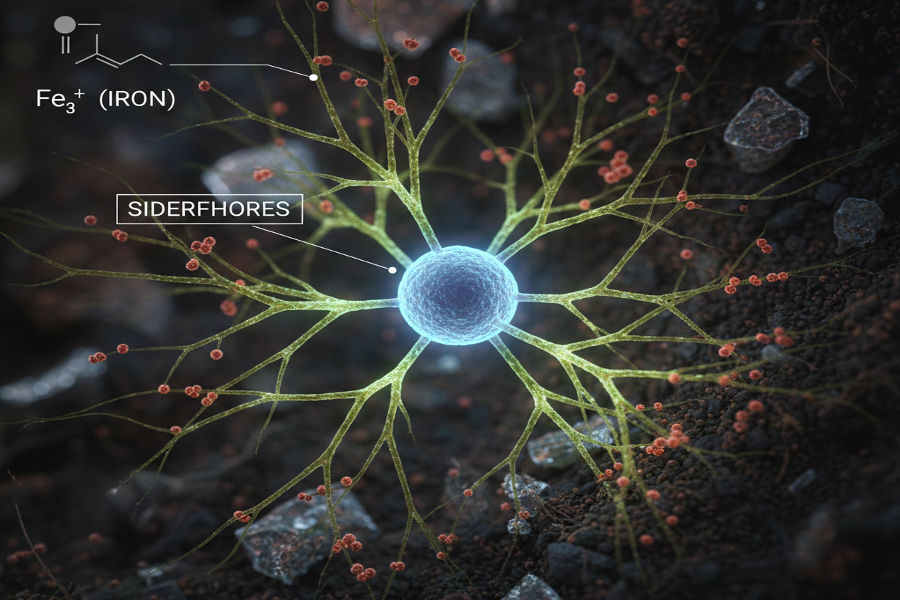
Siderophores – Natural Microbial Chelators That Improve Iron Availability in Crops
Soil is not just a reservoir of minerals; it is a living biological system where millions of microorganisms actively support plant nutrition. Among these beneficial microbial mechanisms, siderophores play a crucial role in making iron available to crops. These naturally produced chelating compounds are one of nature’s most efficient tools for improving micronutrient availability in agriculture.
What Are Siderophores?
Siderophores are organic compounds produced by beneficial soil microorganisms such as Pseudomonas, Bacillus, Azotobacter, and Enterobacter. These microbes release siderophores into the soil to solubilize iron present in its unavailable ferric (Fe³⁺) form.
Iron in soil is often present in insoluble forms, especially in alkaline and calcareous soils. Even when iron is abundant in the soil, plants cannot absorb it easily. Siderophores bind tightly to Fe³⁺ and convert it into a soluble form that can be absorbed by plants and microbes. This natural chelation process significantly improves iron uptake efficiency.
How Siderophores Work in Soil
The mechanism of siderophore action is simple yet powerful:
Microorganisms release siderophores → Siderophores bind with insoluble iron (Fe³⁺) → The iron-siderophore complex becomes soluble → Plants and microbes absorb the iron.
This process enhances chlorophyll formation, improves photosynthesis, increases leaf greenness, and reduces iron deficiency symptoms such as chlorosis (yellowing of leaves). As a result, crop growth, vigor, and yield potential improve.
Soil Conditions That Promote Siderophore Production
For optimal siderophore production and microbial activity, soil should have:
• Adequate organic matter
• Moderate moisture levels
• Balanced pH
• Low chemical stress
• Reduced excessive use of chemical fertilizers and pesticides
Overuse of agrochemicals suppresses beneficial microbial activity, which directly reduces natural iron availability in soil.
Role of Microbial Products in Enhancing Iron Nutrition
Biological formulations can further strengthen siderophore activity in agricultural soils.
ROSIVA-PPFM improves leaf-level microbial balance and enhances nutrient use efficiency through foliar microbial support.
PROBEZ (Bacillus consortium) increases active microbial populations in soil and stimulates siderophore production, improving iron availability and overall nutrient management.
The combined use of such microbial solutions supports sustainable iron nutrition and strengthens the soil-plant-microbe system.
Best Practices for Maximizing Siderophore Benefits
• Increase organic matter through compost, farmyard manure, and green manures
• Avoid excessive chemical fertilizers and pesticides
• Store microbial products in shaded, cool conditions
• Use recommended dosages for effective results
• Maintain balanced soil pH and proper irrigation
Conclusion
Iron deficiency in crops is not always due to low iron content in soil—it is often due to poor availability. Siderophores act as natural iron chelators, improving micronutrient uptake through biological processes. By supporting beneficial microbes and improving soil health, farmers can enhance iron nutrition naturally and sustainably.
Healthy soil microbiology leads to better nutrient availability, stronger crops, and higher productivity.
Build a partnership with nature — let microorganisms work for your farm.

