


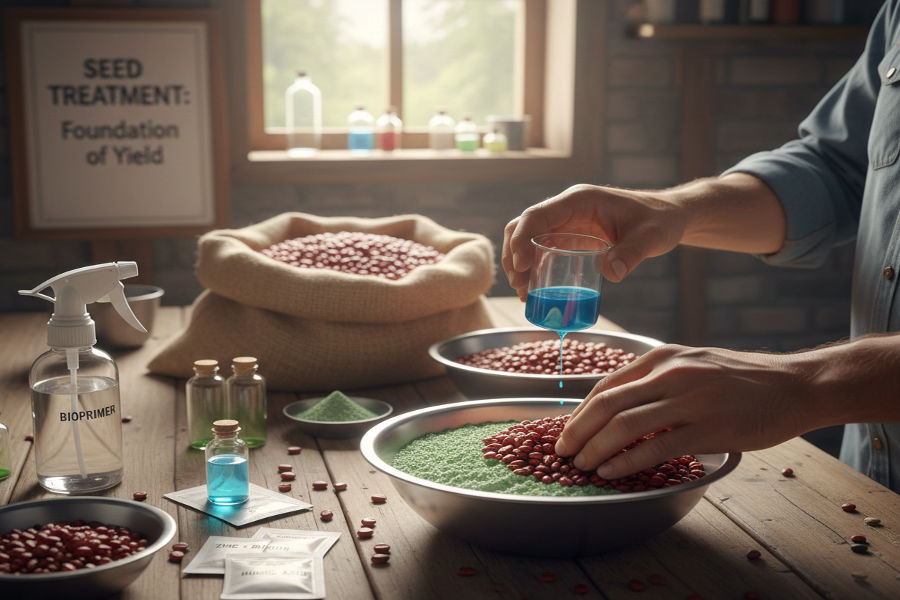
Seed Treatment – Pre-sowing Wisdom and the First Step toward Successful Yield
In agriculture, we usually focus on fertilizers, irrigation, and crop sprays to increase production. However, one small yet extremely important practice done before sowing is seed treatment. When seeds are treated properly, germination improves, seedlings become vigorous, and a strong foundation is laid for the entire cropping season. Therefore, it is essential for farmers to clearly understand the purpose and methods of seed treatment.
Importance and Objectives of Seed Treatment
The main objectives of seed treatment are to ensure quick and uniform germination, protect seeds and seedlings from soil-borne diseases, prevent early pest attacks, and promote healthy root development. Proper seed treatment enhances the crop’s disease resistance and helps reduce the use of chemical fertilizers and pesticides to some extent in later stages. As a result, input costs decrease and sustainable yield improvement is achieved.
Types of Seed Treatment
Hydro-Priming (Seed Priming with Water)
Soaking seeds in clean water for a specific period and then drying them in the shade before sowing results in faster and more uniform germination. This method is especially beneficial in rainfed and dryland conditions.
Nutri-Priming (Nutrient Priming)
Treating seeds with solutions of micronutrients such as zinc, boron, and molybdenum improves early seedling growth and helps prevent initial nutrient deficiencies.
Bio-Priming (Biological Seed Treatment)
Seed treatment using beneficial microorganisms like Trichoderma, Pseudomonas, and Bacillus KONCERT provides natural control over soil-borne diseases, enhances root growth, and increases overall crop vigor.
Pesticide Priming (Chemical Seed Treatment)
In areas where the incidence of diseases or pests is expected to be severe, seed treatment with recommended fungicides and insecticides becomes necessary. This helps prevent problems such as seed rot, seedling mortality, and poor germination.
PGR / Biostimulant Priming (Seed Treatment with Biostimulants)
The use of biostimulants such as humic acid, fulvic acid, and amino acids strengthens seedlings from the initial stage, promotes deeper root growth, and improves stress tolerance.
Benefits of Combined Seed Treatment
In many crops, combining more than one type of seed treatment gives better results. However, it is very important to follow the correct sequence and maintain proper balance while applying multiple treatments.
Conclusion
Seed treatment is a small but highly effective agricultural practice. Just as the saying “drop by drop, a pond is filled,” precise and scientific seed treatment practices contribute significantly to yield enhancement. When seed treatment is done correctly according to crop and local conditions, successful, sustainable, and profitable farming is certainly achievable.

