


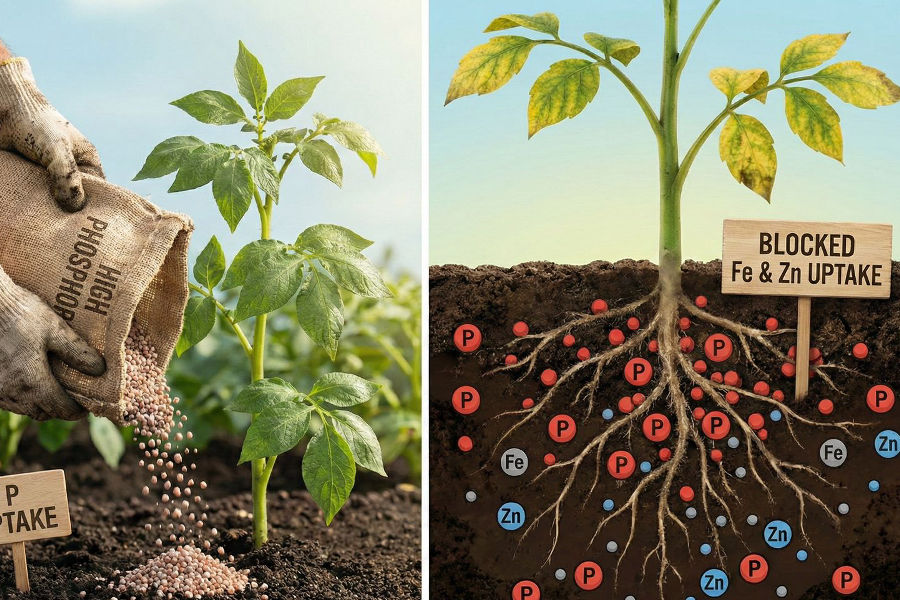
Phosphorus — The Hidden Enemy of Zinc and Iron in Soil
Many farmers apply phosphorus (P) regularly, but very few know that excess phosphorus can silently block two important micronutrients — Zinc (Zn) and Iron (Fe). This problem is called Phosphorus-Induced Deficiency, where zinc and iron are present in the soil but the plant cannot absorb them.
How does this antagonism happen?
When phosphorus becomes high in soil, it reacts with zinc and iron to form insoluble compounds. These compounds do not dissolve in water, so roots cannot absorb them.
Inside the plant, too much phosphorus slows down the movement (translocation) of zinc and iron from roots to leaves. As a result, even if the nutrients enter the roots, they do not reach the plant parts where they are needed.
Symptoms seen in the crop
Zinc and iron deficiency due to high phosphorus shows:
• Yellowing between veins
• Stunted growth
• Weak flowers
• Low yield
This problem is more common in alkaline and calcareous soils.
Practical Solutions
• Reduce or stop phosphorus application for a few seasons when P level is high.
• Apply zinc and iron in chelated or highly soluble forms (EDTA, amino chelates).
• Use biological fertilizers (like Rootanza, koncert).
• Spray zinc and iron for quick correction.
• Use organic matter / leonar(humic acid) to improve micronutrient availability.
• Avoid heavy DAP application during early stages.
• In alkaline soils, apply sulfur or acidic fertilizers.
Balanced nutrition ensures strong growth, healthy green leaves, and higher yield.

