


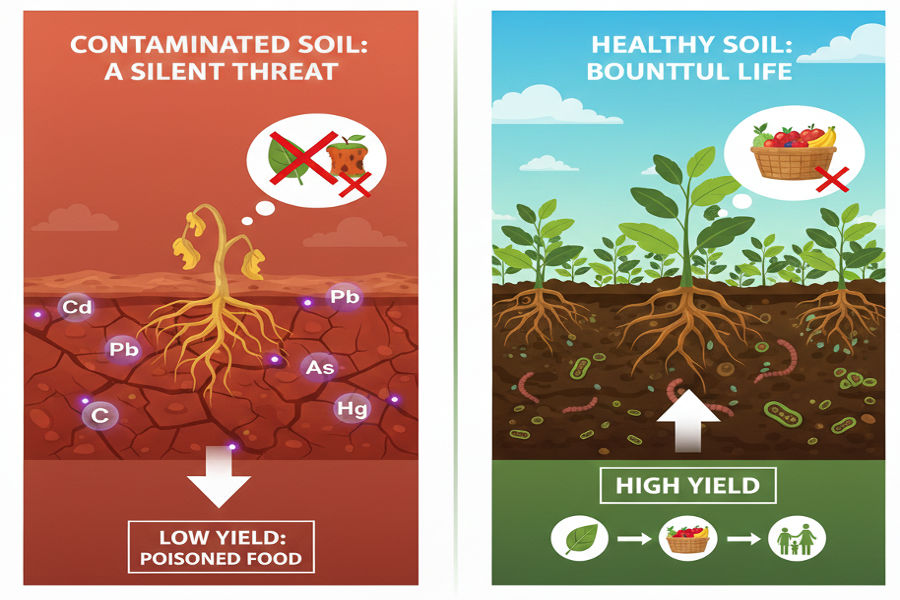
Heavy Metals – Their Harmful Effects on Soil, Crops, and Human Health
Today, we will discuss a very serious but often neglected issue in agriculture: heavy metals. Cadmium (Cd), Lead (Pb), Arsenic (As), Mercury (Hg), Chromium (Cr), and Nickel (Ni) are heavy metals that are non-biodegradable. Once they enter the soil, they do not break down easily and continue to accumulate over the years, gradually contaminating the entire soil ecosystem.
Impact of Heavy Metals on Soil Health
The first and most severe impact of heavy metals is on soil health. These metals significantly reduce the population and activity of beneficial soil microorganisms. As a result, the decomposition of organic matter slows down, the nitrogen–phosphorus cycle is disturbed, and overall soil fertility declines. Soil structure deteriorates, and the symbiotic relationship with mycorrhizae and other beneficial microbes is disrupted, leading the soil toward biological degradation.
Effects of Heavy Metals on Crops
Heavy metals have a direct and visible impact on plants. Excess accumulation of heavy metals restricts root growth, reduces photosynthesis, and interferes with nutrient uptake. Common symptoms include chlorosis, stunted growth, leaf drop, and in severe cases, complete plant death.
Oxidative Stress and Yield Loss
Heavy metals induce oxidative stress in plants by increasing the production of Reactive Oxygen Species (ROS). These reactive molecules damage plant cells, reduce enzyme activity, and disrupt normal metabolic processes. As a result, crop yield declines significantly, and produce quality is adversely affected.
Impact on Human and Animal Health
Heavy metals enter the bodies of humans and animals through the food chain. Long-term exposure leads to accumulation in vital organs such as the liver, kidneys, nervous system, and heart. Chronic exposure can cause cancer, neurological disorders, hormonal imbalance, and reproductive health problems.
Most Hazardous Heavy Metals
Cadmium, lead, arsenic, mercury, and chromium are considered extremely toxic heavy metals. Although copper (Cu) and zinc (Zn) are essential micronutrients, their excessive concentration can also become toxic to plants and humans. Therefore, proper management and monitoring of heavy metals in soil, water, fertilizers, and agricultural inputs is critically important.
Conclusion
Soil health, crop health, and human health are deeply interconnected. Preventing heavy metal contamination, conducting regular soil testing, increasing organic matter, and adopting safe agricultural practices are essential steps toward sustainable farming.
Healthy Soil = Healthy Crops = Healthy Humans

