


Crop Roots – Structure, Types and Functions
In agriculture, most attention is given to the visible part of the crop, but the real life of a plant exists below the soil surface. Roots act as the plant’s water absorption system, nutrient reservoir and structural support. Strong and active roots make crops more stress-tolerant, disease-resistant and productive.
Structure and Types of Roots
Root structure depends on the type of crop. Some crops have deep-growing primary roots known as the tap root system, while others have fibrous root systems. Fruit crops like orange, mango and pomegranate generally develop roots that grow 2 to 3 feet deep and spread one and a half to two times wider than the canopy. Therefore, applying fertilizers near the drip line rather than near the trunk ensures better nutrient utilization.
Major Functions of Roots
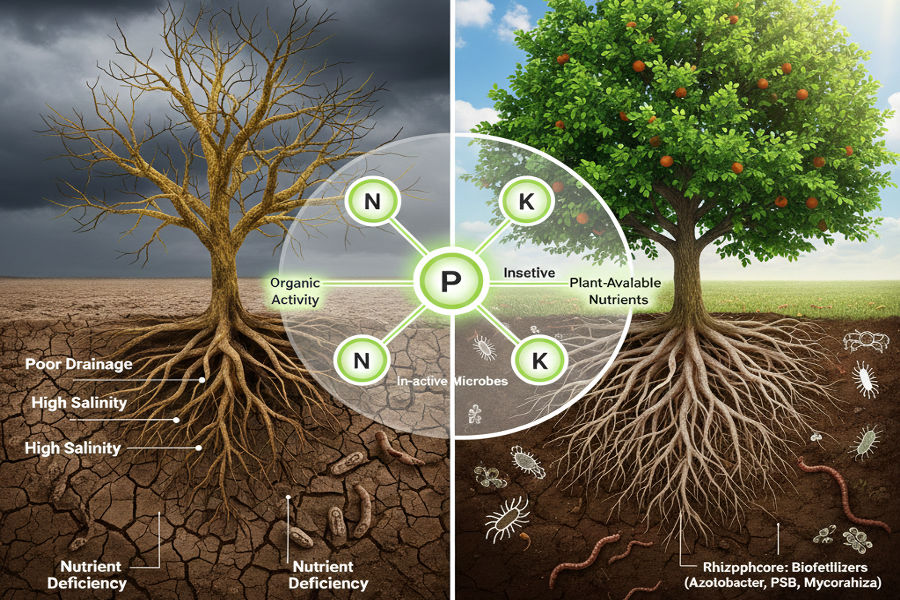
The primary functions of roots include absorbing water and nutrients from the soil, anchoring the plant and interacting with beneficial microorganisms. The zone around the roots, known as the rhizosphere, contains active beneficial microbes that convert nutrients like nitrogen, phosphorus and potassium into plant-available forms.
Essential Factors for Root Development
Healthy root growth requires adequate organic carbon in the soil. Farmyard manure, compost, vermicompost, humic acid and fulvic acid play an important role. Biofertilizers such as Azotobacter, PSB and mycorrhiza enhance root length, thickness and efficiency. Proper drainage and prevention of waterlogging are equally important.
Impact of Poor Root Health
Damage to roots directly affects plant growth. Excess water, soil compaction, salinity, improper chemical spraying and overuse of fertilizers can lead to root rot. As a result, nutrient uptake decreases, leaves turn yellow, flower drop increases and yield declines. In many cases, poor root health is the hidden cause behind visible crop diseases.
Conclusion
For successful farming, it is essential to focus not only on the above-ground crop but also on the underground root system. Strong roots lead to strong crops, and strong crops ensure reliable yields. This is the true foundation of sustainable agriculture.

