


Cobalt (Co): A Critical but Often Ignored Micronutrient
In modern agriculture, greater emphasis is placed on major nutrients such as nitrogen, phosphorus, and potassium. However, the true strength of crops also depends on certain micronutrients that are required in very small quantities but have a direct impact on internal biological processes. Cobalt (Co) is one such micronutrient that is often overlooked but plays a highly decisive role.
Relationship Between Cobalt and Nitrogen Fixation
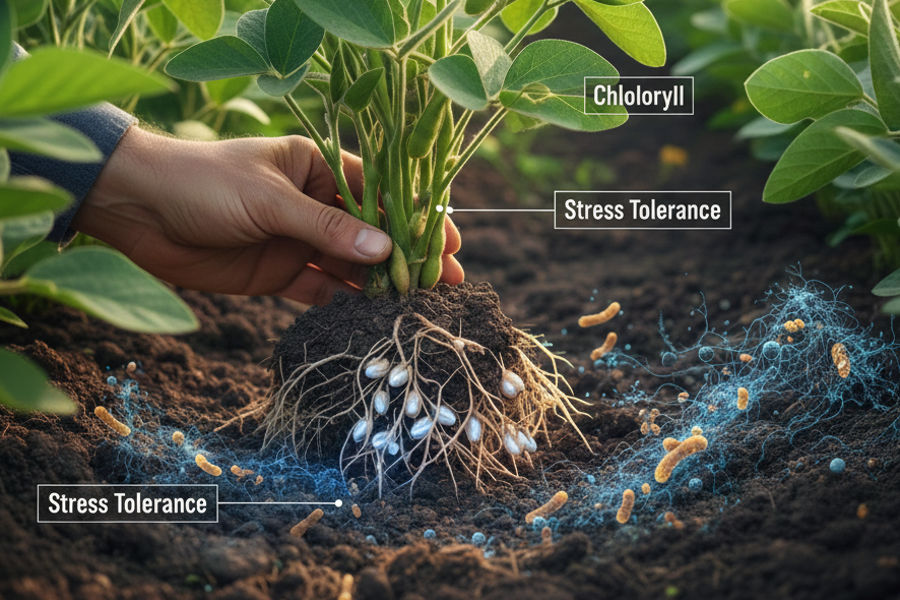
Cobalt is an essential element for nitrogen-fixing bacteria such as Rhizobium. Especially in leguminous crops, the formation of root nodules, their activity, and the conversion of atmospheric nitrogen into plant-available form depend greatly on the presence of cobalt. When cobalt is deficient, nodules may form, but they do not function efficiently, resulting in insufficient nitrogen supply to the crop and restricted growth.
Effect of Cobalt on Root Development
Cobalt enhances root length, thickness, and overall strength. Strong roots occupy a larger soil volume, absorb nutrients more efficiently, and provide better plant stability. Cobalt also improves microbial activity in the root zone, keeping the soil biologically active and nutrients more available to plants.
Enzyme Activation, Chlorophyll Formation, and Stress Tolerance
Cobalt plays a role in activating several plant enzymes that drive essential metabolic and growth-related processes. It also indirectly supports chlorophyll formation, leading to improved leaf greenness, better photosynthesis, and stronger overall growth. Additionally, cobalt helps crops tolerate stress conditions such as heat, drought, and other environmental challenges.
Why Balanced Cobalt Nutrition Is Important
Advanced fertilizer formulations such as ZINCABOR intentionally include cobalt along with zinc, boron, and sulfur. When these micronutrients are supplied together in balanced and trace amounts, nutrient uptake efficiency improves, root systems become stronger, and crop growth remains uniform and sustained.
Crops That Respond Well to Cobalt
Leguminous crops such as chickpea, soybean, green gram, black gram, and kidney bean show quick and visible responses to cobalt nutrition. Adequate cobalt availability enhances nitrogen fixation, improves plant vigor, and contributes to higher and more stable yields.

