


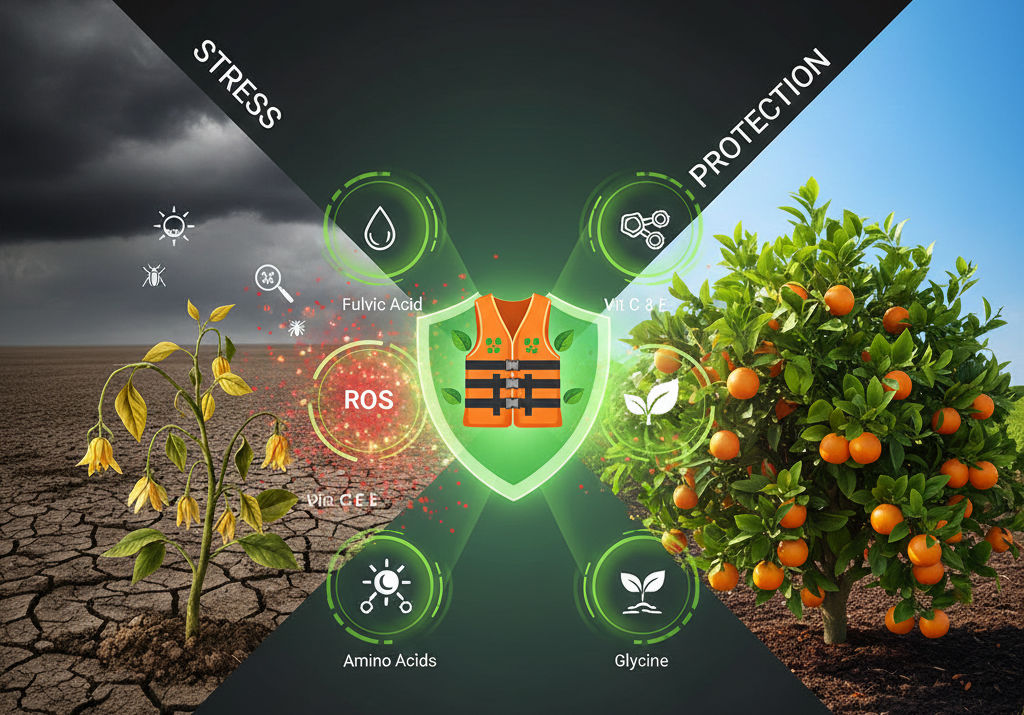
Antioxidants – The Life Jacket of Crops
In today’s changing climate, farming has become increasingly challenging. Heat waves, cold stress, water stress, saline soils, pests and diseases, and frequent chemical sprays put crops under severe stress. This stress is not only visible externally but causes significant damage inside the plant cells. Therefore, stress management has become one of the most important aspects of modern agriculture.
What are Antioxidants?
When plants experience biotic or abiotic stress, harmful compounds called Reactive Oxygen Species (ROS) are produced inside their cells. These compounds reduce chlorophyll content in leaves, affect photosynthesis, increase flower drop, and slow down fruit growth. The substances that neutralize these harmful compounds and protect plant cells are called antioxidants.
That is why antioxidants act like a life jacket for plants.
Important Antioxidants and Their Functions
Glycine is an important stress-reducing component. It protects plants from heat stress, chemical stress, and environmental fluctuations. It also helps maintain smooth photosynthesis and strengthens newly formed cells.
Fulvic Acid safely transports nutrients into plant cells. It reduces internal damage caused by stress and keeps roots and leaves efficient and active.
Amino Acids repair cells damaged due to stress. They help maintain flowering and fruit set and bring the plant back to a healthy and vigorous condition.
Vitamin C, also known as Ascorbic Acid, is a water-soluble antioxidant. It neutralizes harmful oxygen radicals formed inside plant cells, reduces heat and drought stress, and keeps the photosynthesis process functioning smoothly.
Vitamin E, also known as Tocopherol, protects plant cell membranes. It prevents cell rupture under hot and dry conditions and improves fruit quality, size, and shine.
When Should Antioxidants Be Applied?
Antioxidants should be applied before flowering, when flower drop begins, and during fruit setting and fruit development stages. They are also useful when heat waves, cold stress, or water stress appear, as well as three to four days after insecticide or herbicide application.
Proper Time for Spraying
Spraying should be done between seven and ten in the morning or after four in the evening. Selecting a time when moisture remains on the leaves helps improve the effectiveness of antioxidants.
Conclusion
Antioxidants are not yield-enhancing fertilizers; they are protective shields that help plants survive stress. In today’s climatic conditions, the balanced use of Glycine, Fulvic Acid, Amino Acids, and Vitamins truly acts as a life jacket for crops. If this technology reaches farmers effectively, many crops can certainly be saved from stress.

