


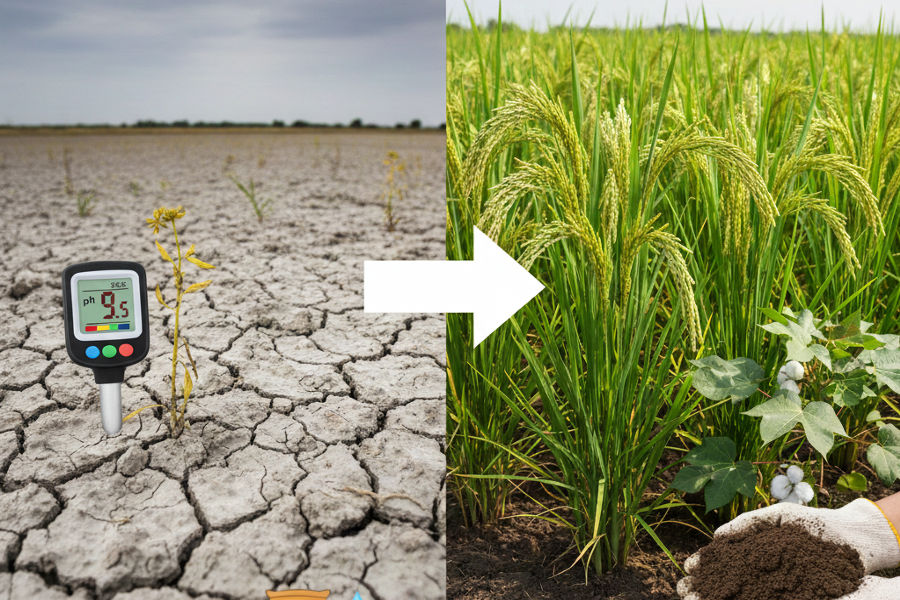
Alkaline Soils and Their Reclamation
In many farms, crop yields remain low despite proper fertilizer and irrigation management. One major reason behind this problem is alkaline soil. With correct knowledge and scientific practices, such soils can be reclaimed and made productive.
What Is Alkaline Soil
Soils with a pH higher than 8.5, where
-
Exchangeable sodium (Na⁺) is high
-
Calcium and magnesium are low
-
Soil becomes hard, sticky, and poorly drained
are known as alkaline or sodic soils.
Major Characteristics of Alkaline Soils
-
Soil pH generally ranges from 8.5 to 10.0
-
Poor soil structure and low infiltration
-
Limited oxygen availability to roots
-
Deficiency of iron, zinc, and manganese
-
Stunted crop growth and reduced yield
Why Alkaline Soils Are Harmful to Crops
Excess sodium destroys soil structure, restricts air and water movement, reduces nutrient availability, weakens microbial activity, and ultimately causes severe yield loss.
Measures to Reclaim Alkaline Soils
1) Use of Gypsum
Gypsum replaces sodium with calcium and improves soil structure. The application rate should always be based on soil test results.
2) Application of Organic Matter
Regular use of farmyard manure, compost, vermicompost, and green manures improves soil aggregation and biological activity.
3) Use of Sulfur and Sulfur-Based Fertilizers
These help in gradual reduction of soil pH and increase micronutrient availability.
4) Proper Water and Drainage Management
After gypsum application, leaching with good-quality water is essential. Proper drainage is critical for successful reclamation.
5) Selection of Tolerant Crops
Rice, barley, sodium-tolerant wheat varieties, cotton, and sugarcane are suitable during the initial reclamation phase.
6) Foliar Application of Micronutrients
Foliar sprays of iron, zinc, and manganese are more effective, as root uptake is limited in alkaline soils.
Conclusion
Alkaline soil is not wasteland. With soil testing, proper reclamation practices, and patience, such soils can be gradually converted into productive farmland. Improving soil health is the foundation of sustainable agriculture.

