


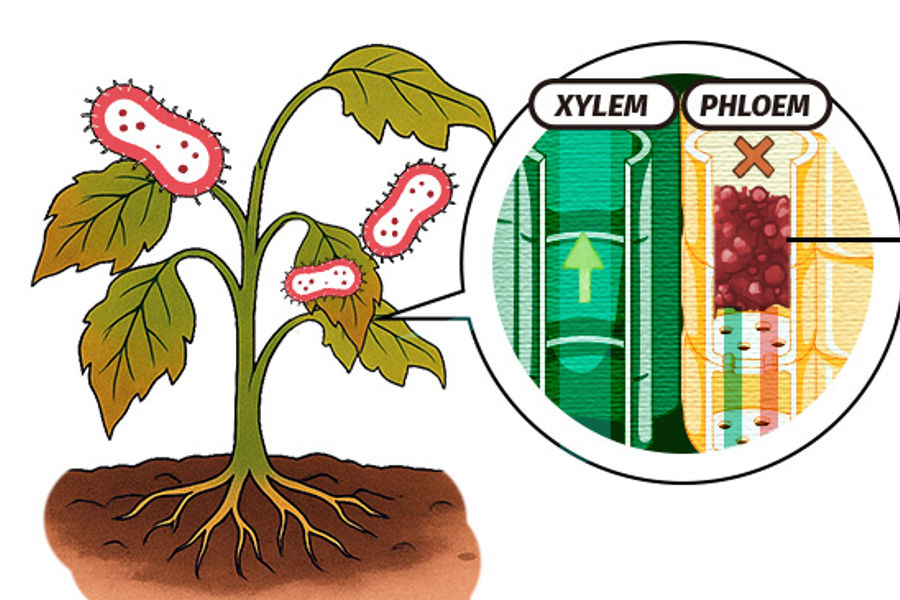
Xylem: The Lifeline Transport System of Crops
Xylem is the most important transport system in plants that delivers water and nutrients to the right place at the right time. Without xylem, a crop cannot stand upright, grow properly, or produce yield. That is why xylem is considered the lifeline of a plant.
Structure of Xylem
Xylem is a complex tissue system composed of tracheids, vessels, xylem parenchyma, and xylem fibers. Together, these components form a continuous pathway that transports water and nutrients from roots to stems, branches, leaves, and fruits.
Functions of Xylem
The primary function of xylem is the upward transport of water and mineral nutrients absorbed by roots. Nutrients such as calcium, magnesium, potassium, and boron move through xylem. Xylem also maintains turgor pressure in cells, which keeps plants firm, fresh, and physiologically active.
Role in Photosynthesis and Temperature Regulation
Adequate water supply to leaves enhances photosynthesis efficiency. Through transpiration, xylem helps in natural air cooling of plants, maintaining temperature balance and reducing heat stress.
Additional Roles of Xylem
Xylem provides mechanical strength to plants, keeps stems strong, supports efficient water use during drought conditions, and helps improve fruit juice content, size, and weight.
Xylem Blockage and Crop Wilting
When xylem gets blocked, water movement stops and plants start wilting. This condition is known as wilt or plant death. Diseases like Fusarium cause xylem blockage, leading to severe crop damage.
Message for Farmers
A strong xylem system means a strong crop. Healthy roots, balanced nutrition, proper irrigation management, and the use of biostimulants and amino acids are essential to keep xylem efficient and functional throughout the crop cycle.

