


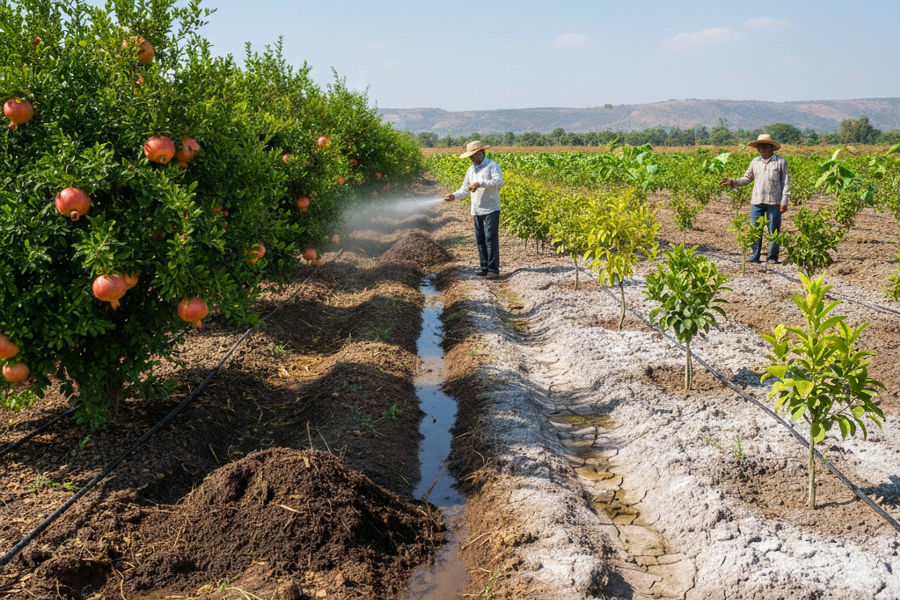
Calcareous Soils – Characteristics, Challenges, and Scientific Management Practices
In agriculture, low productivity is often not caused by the crop or fertilizers, but by the type of soil. In regions dominated by calcareous soils, improper soil management results in poor fertilizer response and persistent micronutrient deficiencies. Therefore, understanding calcareous soils and managing them scientifically is essential for sustainable crop production.
What Are Calcareous Soils?
Soils that contain a high proportion of calcium carbonate (CaCO₃) are known as calcareous soils. These soils are commonly found in arid and semi-arid regions. In India, calcareous soils are widely distributed across Maharashtra, Gujarat, Rajasthan, Madhya Pradesh, and parts of Karnataka.
Key Characteristics of Calcareous Soils
-
Soil pH generally ranges from 7.5 to 8.5 or higher
-
High calcium content but deficiency of iron, zinc, manganese, and phosphorus
-
Good water drainage but poor nutrient availability
-
High incidence of iron chlorosis (yellowing of leaves)
-
Low and inconsistent response to applied fertilizers
Why Do Calcareous Soils Create Problems for Crops?
Excess calcium in calcareous soils reacts with several nutrients, converting them into insoluble forms. As a result, even when fertilizers are applied, nutrients remain unavailable to plant roots. This problem is particularly severe in crops such as grapes, pomegranate, banana, citrus, vegetables, and other fruit crops. Consequently, plant growth is restricted, flowering is affected, and yields decline.
Scientific Practices to Improve Calcareous Soils (Reclamation Measures)
1) Increase Organic Carbon Content
Regular application of farmyard manure, compost, vermicompost, and green manure improves soil structure, enhances microbial activity, and increases nutrient availability.
2) Use Acid-Forming Fertilizers and Organic Acids
Fertilizers such as ammonium sulfate, single super phosphate, and ferrous sulfate help reduce soil pH. In addition, organic acid-based products like AGRIPLEX-OA help neutralize excess salts and bicarbonates present in irrigation water and soil.
3) Foliar Application of Micronutrients
Micronutrients such as iron (Fe), zinc (Zn), and manganese (Mn) should be applied through foliar sprays in chelated form to bypass soil pH constraints. Products like Exide (chelated micronutrient formulations) give effective results.
4) Use of Beneficial Microbial Inputs
Phosphate Solubilizing Bacteria (Key-Phos), Potassium Mobilizing Bacteria (Key-Potash), and PPFM (ROSIVA) improve biological activity in soil and convert nutrients into plant-available forms.
5) Application of Sulfur and Sulfur-Based Products
Elemental sulfur or sulfur-containing fertilizers gradually lower soil pH and improve nutrient availability. Products such as Thiogreen are effective for long-term soil correction.
Conclusion
Calcareous soils are not unproductive soils; they are soils that require proper and scientific management. Through the integrated use of organic matter, micronutrients, biological inputs, sulfur, and balanced fertilizer management, it is entirely possible to achieve high, quality, and sustainable crop yields even in calcareous soils.

