


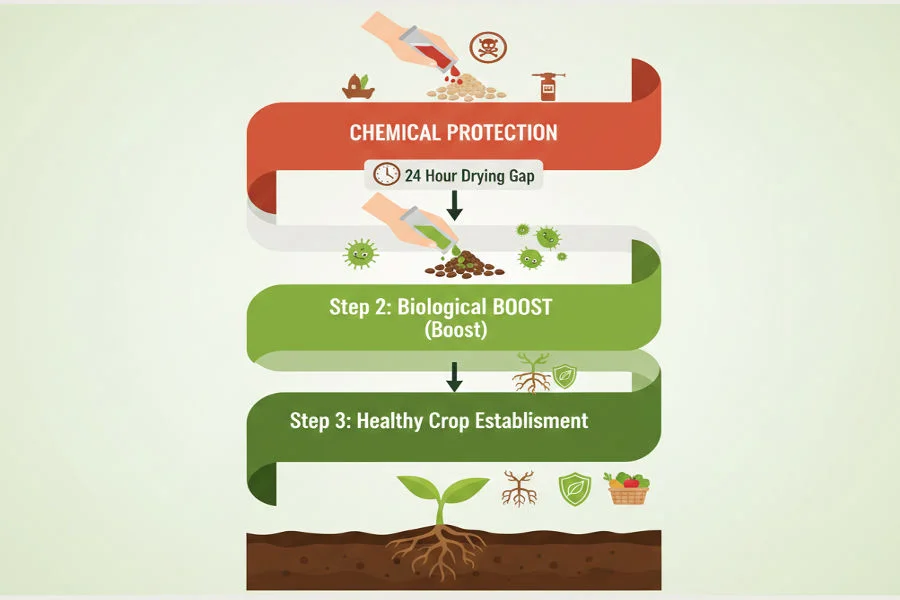
Biological and Chemical Seed Treatment – Compatibility and Correct Sequence for Healthy Crop Establishment
Seed treatment is the first and most critical step toward a healthy and productive crop. A common question among farmers is whether biological and chemical seed treatments can be used together, and if yes, what is the correct sequence. This question is extremely important because using the wrong combination or sequence can deactivate beneficial microorganisms and reduce the overall effectiveness of seed treatment.
The most important point to understand is that chemical fungicides and insecticides can negatively affect beneficial microbes. Therefore, biological and chemical seed treatments should not be mixed and applied together at the same time unless their compatibility is scientifically proven. Following the correct sequence ensures both crop protection and microbial activity.
1. Chemical Seed Treatment First
If there is a high risk of seed rot, seedling mortality, seed-borne diseases, or early-stage insect attack, chemical seed treatment should be done first. Use recommended fungicides or insecticides as per crop and disease pressure.
After treatment, seeds should be dried completely in shade, not under direct sunlight.
2. Maintain a Time Gap
After chemical seed treatment, it is advisable to maintain a minimum gap of 24 hours. This resting period helps reduce the toxic effect of chemicals on the seed surface and creates a safer environment for beneficial microorganisms to survive during the next step.
3. Biological Seed Treatment at the End
Once the waiting period is completed, apply biological seed treatments such as Trichoderma, Consort (Agri Search product), or other beneficial microbial formulations. Applying biological agents at the final stage allows them to safely colonize the seed surface and establish early root-zone protection.
4. Use of Biostimulants and Micronutrients
Biostimulants such as humic acid, fulvic acid, amino acids, or micronutrient solutions can be applied along with or immediately after biological seed treatment. These inputs support early root development, improve nutrient availability, and enhance microbial activity.
Important Precaution
Never mix chemical and biological products in the same solution unless their compatibility has been clearly tested and proven. Improper mixing can kill beneficial microbes and make the treatment ineffective.
Conclusion
Correct seed treatment is not about using more products, but about using them in the right order, with the right gap, and based on field conditions.
A well-planned seed treatment sequence ensures a safe, balanced, and sustainable start for the crop, leading to stronger seedlings, better root development, and higher productivity.

