


Bio-fertilizers and the New Generation – A Sustainable Solution for Soil Health
we understood that soil is not just an inert medium but a living laboratory. This fertile soil is the true heart of agriculture. However, excessive and imbalanced use of chemical fertilizers has been continuously disturbing the biological balance of soil. In this context, the new generation of bio-fertilizers has become a necessity of the present time.
What Are Modern Bio-fertilizers?
Today’s bio-fertilizers are no longer limited to one or two microorganisms. Modern bio-fertilizers are research-based, rich microbial consortia developed to work together synergistically. These beneficial microorganisms collectively provide multiple advantages to soil and crops.
They fix atmospheric nitrogen, solubilize locked phosphorus, enhance potassium availability, supply calcium and other micronutrients, and also produce natural plant growth-promoting hormones that support overall crop development.
Impact of Bio-fertilizers on Soil and Crops
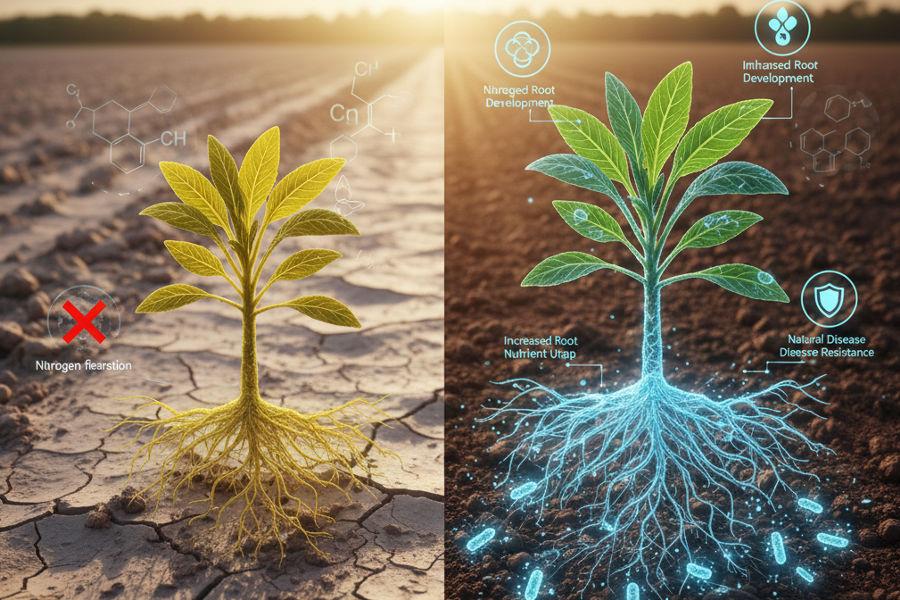
The use of bio-fertilizers increases both the population and activity of beneficial microorganisms in the soil. This microbial workforce enhances root development, improves nutrient uptake efficiency, and builds natural disease resistance in crops. As a result, crops become healthier, more stress-tolerant, and higher yielding.
Methods of Using Bio-fertilizers
Bio-fertilizers can be applied through multiple methods. Seed treatment ensures early microbial association from germination. Root dipping of seedlings before transplanting helps in strong crop establishment. Foliar spray, soil drenching, or application through drip irrigation delivers microorganisms directly to the active root zone.
Precautions While Using Bio-fertilizers
Bio-fertilizers are living products and should not be exposed to direct sunlight. Improper storage or high temperatures can reduce microbial viability. They should not be mixed immediately with chemical fertilizers or pesticides. Maintaining a proper interval ensures maximum effectiveness.
Time to Reduce Dependency on Chemical Fertilizers
Regular use of bio-fertilizers acts as an insurance policy for soil health. With scientific integration, chemical fertilizer usage can be reduced by 20 to 25 percent. This lowers production costs, preserves soil life, and simultaneously improves crop productivity.
Conclusion
Our ancestors handed over living, fertile soil to us. Preserving this soil and passing it on to the next generation in a healthy condition is our responsibility. Adopting the new generation of bio-fertilizers is a strong step toward soil conservation, sustainable yields, and a secure agricultural future. True sustainable farming begins with protecting life within the soil.

