


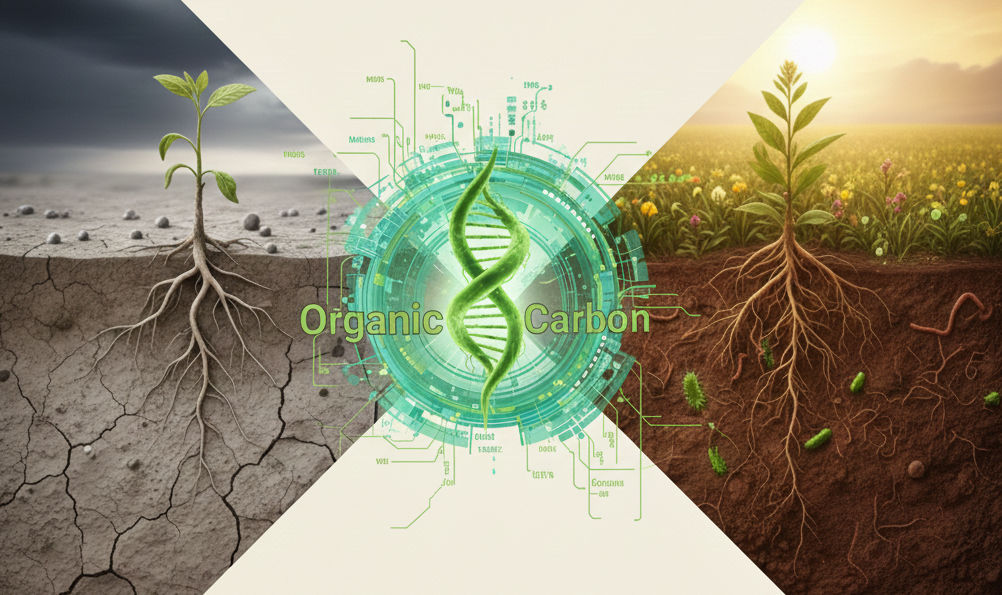
Organic Carbon – The True Foundation of Soil Health
One of the most critical soil-related problems in Indian agriculture today is the decline in soil organic carbon. Excessive chemical fertilizers, reduced organic inputs, deep ploughing, non-decomposition of crop residues and reduced microbial activity have severely affected soil fertility.
Importance of Organic Carbon
For optimum crop productivity, soil should ideally contain 0.75 to 1.0 percent organic carbon. Organic carbon improves soil structure, enhances microbial growth, increases water holding capacity and boosts nutrient absorption and biochemical activity.
Real Reason Behind Low Yield
Often low yield is not due to lack of fertilizers but due to deficiency of organic carbon. Without organic carbon, soil cannot hold or supply nutrients efficiently.
Where Organic Carbon Works
Organic carbon is most effective in the top 0 to 15 cm soil layer. Therefore, organic materials must be incorporated in this zone for best results.
Amount of Organic Matter Required
According to scientific estimates, to increase soil organic carbon by 1 percent in 15 cm depth per hectare, approximately 25 to 30 tons of well-decomposed organic manure is required. This equals 2.5 to 3 kg per square meter.
Ways to Improve Organic Carbon
Continuous use of compost, farmyard manure, vermicompost, green manure, crop residues and biological microbes improves soil carbon levels. For this purpose, Originio organic manure by Agri Search India Pvt Ltd is considered an effective option.
Conclusion
Improving soil organic carbon is not a one-season task but a continuous process. Once carbon improves, soil health enhances, chemical fertilizer dependency reduces and crop yields become sustainable.

