


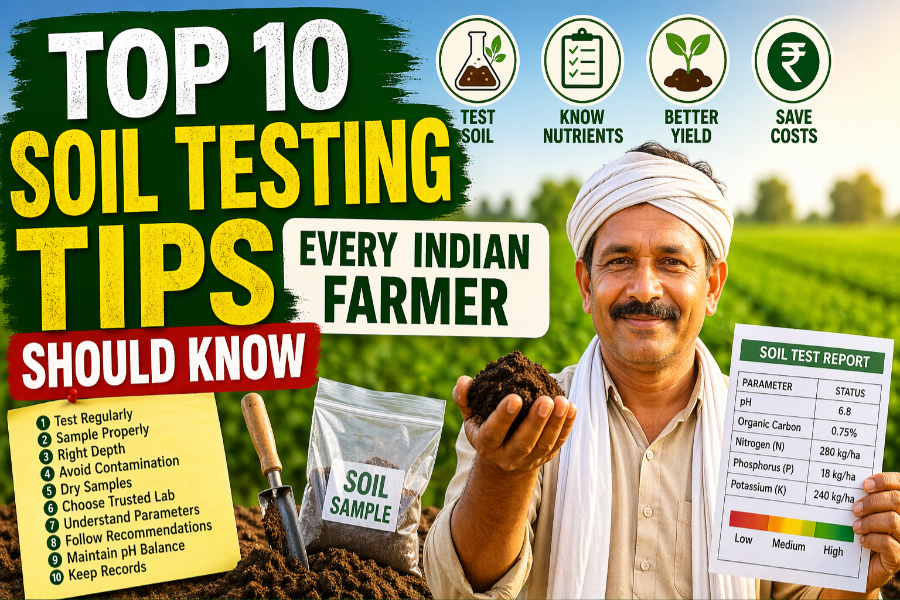
Top 10 Soil Testing Tips Every Indian Farmer Should Know
Healthy soil is the foundation of profitable farming. Yet, many Indian farmers still apply fertilizers without knowing the actual nutrient status of their soil. This increases input costs and reduces crop productivity over time. Soil testing is a simple and powerful solution that helps farmers make better decisions, improve yield, and maintain long-term soil health.
1. Test Your Soil Regularly for Better Results
Soil fertility changes over time due to continuous cropping and fertilizer use. Testing your soil every 2–3 years helps you understand its current condition and nutrient levels.
2. Collect Soil Samples from Different Areas
Always collect soil from multiple spots in your field (5–10 locations). Mix them well to get an accurate sample that represents the entire field.
3. Maintain the Correct Sampling Depth
For most crops, collect soil from a depth of 6–8 inches. For fruit crops and deep-rooted plants, deeper samples may also be required.
4. Avoid Contaminated Soil Samples
Do not take samples from near bunds, compost pits, irrigation channels, or recently fertilized areas. This can lead to incorrect results.
5. Dry Soil Samples Properly
Always air-dry the soil sample in shade before sending it for testing. Avoid direct sunlight, as it can affect the results.
6. Choose a Trusted Soil Testing Laboratory
Use certified or government-approved soil testing labs to ensure accurate and reliable results.
7. Understand Key Soil Parameters
Focus on important values like soil pH, organic carbon, nitrogen (N), phosphorus (P), and potassium (K), as they directly impact crop growth.
8. Apply Fertilizers Based on Soil Test Reports
Avoid guesswork. Apply fertilizers according to the recommendations in the soil test report to save costs and improve yield.
9. Maintain Balanced Soil pH
Soil pH affects nutrient availability. Maintaining the right pH level helps crops absorb nutrients more efficiently.
10. Keep Records for Future Planning
Maintain records of soil test reports to track changes over time and plan better farming practices.
Conclusion
Soil testing is a smart and necessary step for every farmer. By following these tips, Indian farmers can improve soil health, reduce input costs, and achieve better crop yields. Healthy soil leads to sustainable and profitable farming.

