


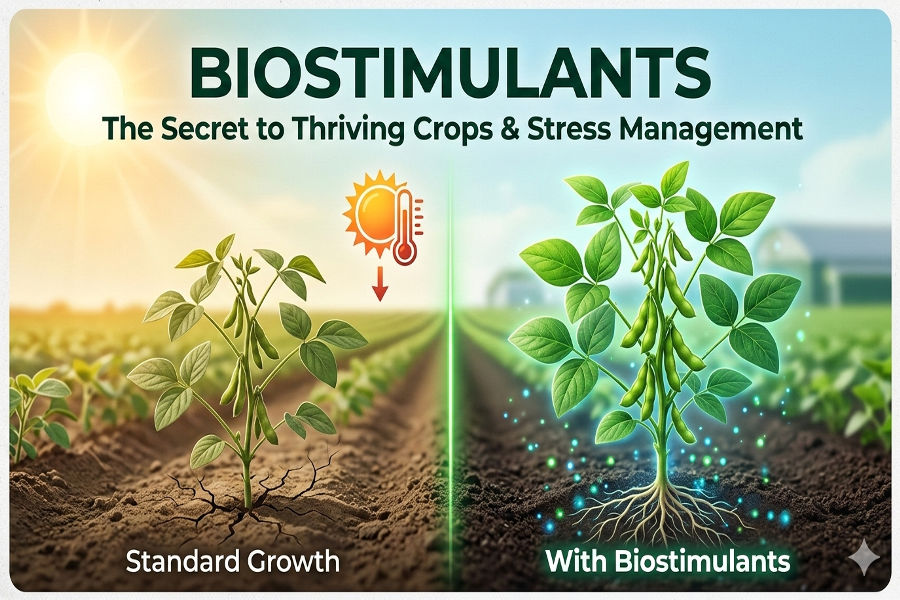
Role of Biostimulants in Crop Growth and Stress Management
Modern agriculture faces major challenges such as drought, salinity, heat stress, and nutrient deficiencies. Biostimulants offer a sustainable solution to improve crop productivity, nutrient efficiency, and stress tolerance.
What Are Biostimulants?
Biostimulants are substances or microorganisms that stimulate natural plant processes to enhance nutrient uptake, improve nutrient use efficiency, increase tolerance to abiotic stress, and improve crop quality. Unlike fertilizers, they do not directly supply nutrients but help plants use available nutrients more effectively.
Common types include seaweed extracts, humic and fulvic acids, amino acids, beneficial microbes, and silicon-based products.
Role in Crop Growth
Biostimulants promote stronger root development, improving water and nutrient absorption. They enhance nutrient use efficiency, support better vegetative growth, increase chlorophyll content, and improve photosynthesis. As a result, crops show better yield, quality, and uniformity.
Role in Stress Management
Biostimulants help crops tolerate drought by improving water-use efficiency. They reduce salinity stress by regulating ion balance, protect plants from heat and cold stress through antioxidant activity, and improve performance under nutrient-deficient conditions.
Conclusion
Biostimulants are an important tool in sustainable and climate-smart agriculture. When used with balanced fertilization and proper agronomic practices, they enhance crop growth, improve stress tolerance, and increase productivity in an environmentally responsible way.

