


PPFM Bacteria – Nature’s Remarkable Gift and a Biological Growth Enhancer for Crops
In agriculture, we usually focus on soil, water, fertilizers, and crop protection measures. However, certain invisible microorganisms play a highly significant role in crop growth. One such important component is PPFM bacteria (Pink Pigmented Facultative Methylotrophs). These microorganisms promote crop growth, enhance stress tolerance, and help maintain production stability.
What Are PPFM Bacteria?
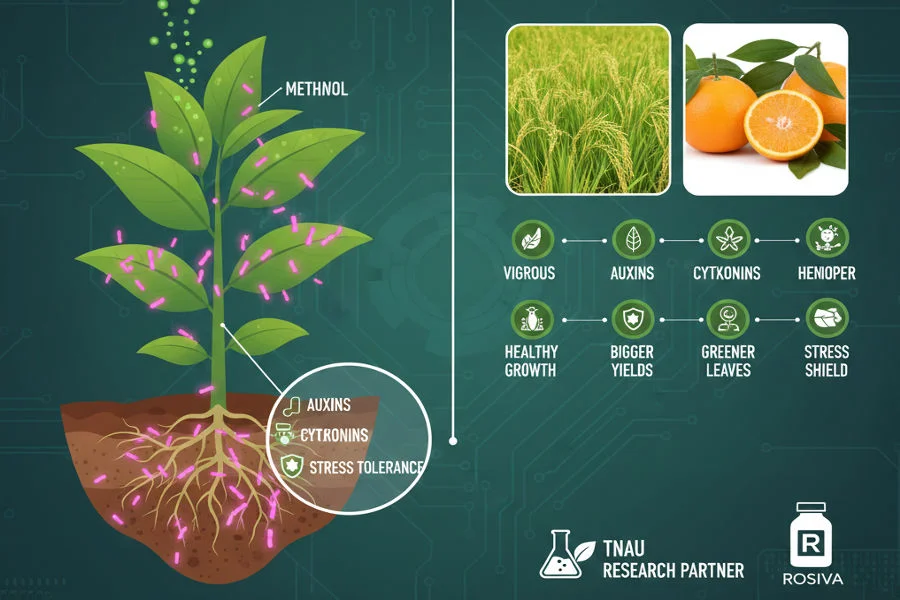
PPFM bacteria primarily belong to the genus Methylobacterium. These bacteria naturally inhabit the surface of leaves (phyllosphere) and the region surrounding plant roots (rhizosphere). During growth, plants release very small amounts of methanol. PPFM bacteria utilize this methanol as a source of energy and, in return, produce beneficial biological compounds that support plant development.
How Do PPFM Bacteria Work?
PPFM bacteria grow by utilizing methanol emitted by plants. During this process, they produce bioactive compounds that stimulate plant growth. These microorganisms assist in the production of natural growth regulators such as auxins and cytokinins. As a result, root development becomes stronger, leaves remain fresh and healthy, and flowering and fruit setting improve.
In addition, PPFM bacteria play a crucial role in enhancing crop stress tolerance. Under high temperatures, water scarcity, saline soils, or other adverse conditions, crops treated with PPFM show better survival capacity. This leads to improved production stability and better crop quality.
Key Benefits of PPFM
The use of PPFM promotes vigorous crop growth. Nutrient absorption becomes more efficient. Leaves remain greener and physiologically active. Flowering and fruiting performance improves. Crops develop better resistance under stress conditions. Overall yield quality and market value are positively influenced.
Suitable Crops for PPFM Application
PPFM bacteria are beneficial for nearly all types of crops. Positive results have been observed in banana, citrus, rice, onion, vegetables, fruit crops, cereals, pulses, oilseeds, and spice crops. Regular application helps maintain balanced growth and ensures consistent productivity.
Method of Application
PPFM can be applied through foliar spray (leaf application). It can also be used via drip irrigation systems or soil drenching methods. Planned application at appropriate crop growth stages ensures better and more visible results.
Research and Technical Reliability
To strengthen and scientifically validate PPFM technology, research collaboration plays an essential role. In this direction, a research agreement has been established with Tamil Nadu Agricultural University. This collaboration ensures that the developed technology is scientifically tested, reliable, and effective. The product will soon be available in the market under the name ROSIVA.
Conclusion
Agricultural transformation does not always come from large machinery or chemical inputs. Sometimes, microorganisms working at a microscopic level can create a significant impact. PPFM bacteria are one such natural and effective partner. When used at the right time and in the right manner, they act as true biological growth enhancers, contributing meaningfully to improved yield, better quality, and enhanced profitability.

