


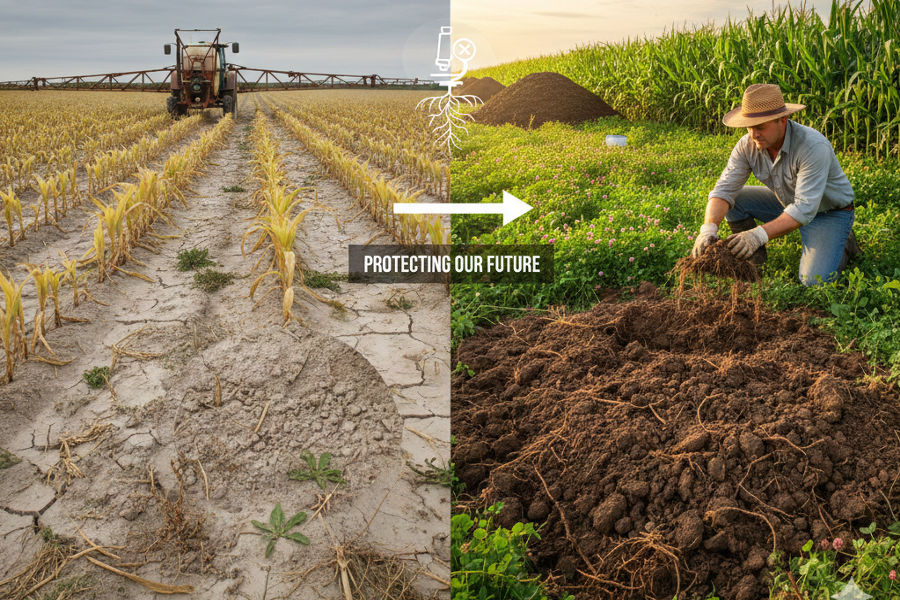
Chemical Herbicides and Soil Microorganisms: How to Protect Soil Health
Chemical herbicides are widely used in agriculture for weed control. Although they are effective in managing weeds, it is extremely important to understand their impact on soil microorganisms. Soil health, nutrient cycling, and crop productivity all depend on microbial activity. Excessive use without proper knowledge can cause long-term damage.
Importance of Soil Microorganisms
Bacteria, fungi, and actinomycetes present in soil are essential components of agricultural ecosystems. They decompose organic matter and make essential nutrients available to plants. Their key functions include nitrogen fixation, phosphorus solubilization, improving micronutrient availability, and maintaining biological balance in the soil. When microbial activity is high, soil remains fertile and crop growth becomes vigorous.
Impact of Herbicides on Soil Microorganisms
According to research, the population of soil microorganisms may decline within 7 to 30 days after herbicide application. The extent of this impact depends on the type of herbicide, dosage used, soil type, organic matter content, and frequency of application. Repeated use increases the risk of reduced soil biodiversity. Some herbicides interfere with nitrogen-fixing bacteria, leading to reduced nodule formation and lower nitrogen uptake.
Effect on Enzyme Activity and Nutrient Cycling
The activity of important soil enzymes such as phosphatase and dehydrogenase may decrease due to herbicide application. This can reduce phosphorus availability and overall microbial activity. If the decomposition of organic matter slows down, the soil carbon cycle is affected. As a result, crops may not receive essential nutrients on time.
Sensitive Microorganisms and Long-Term Effects
Certain microorganisms, such as mycorrhizal fungi and Azotobacter, are more sensitive to herbicides. A decline in their population can reduce root development and nutrient absorption. Higher doses and long-persisting herbicides can accumulate, especially in sandy soils or soils low in organic matter, causing greater damage. Continuous use may lead to permanent changes in the soil microbial community and the development of resistant microbial strains.
Is Microbial Recovery Possible?
If herbicides are used in limited quantities and at recommended doses, microbial populations may recover over time. However, continuous and excessive use can disturb the biological balance of the soil, leading to long-term effects on crop productivity.
Measures to Protect Soil Health
Rational and judicious use of herbicides is essential. Following the recommended dosage and proper timing is crucial. Adopting integrated weed management practices such as inter-cultivation, mulching, and crop rotation can reduce dependence on chemicals. The use of organic matter, farmyard manure, compost, and biochar increases soil carbon and enhances microbial activity. By adopting such sustainable practices, soil health can be maintained in the long term.
Conclusion
Although chemical herbicides are useful for weed control, they can impact soil microorganisms. By following recommended doses, limiting usage, and adopting integrated management practices, soil fertility, biodiversity, and crop productivity can be sustained. Sustainable agriculture is the true direction for the future, and protecting soil health is the responsibility of every farmer.

